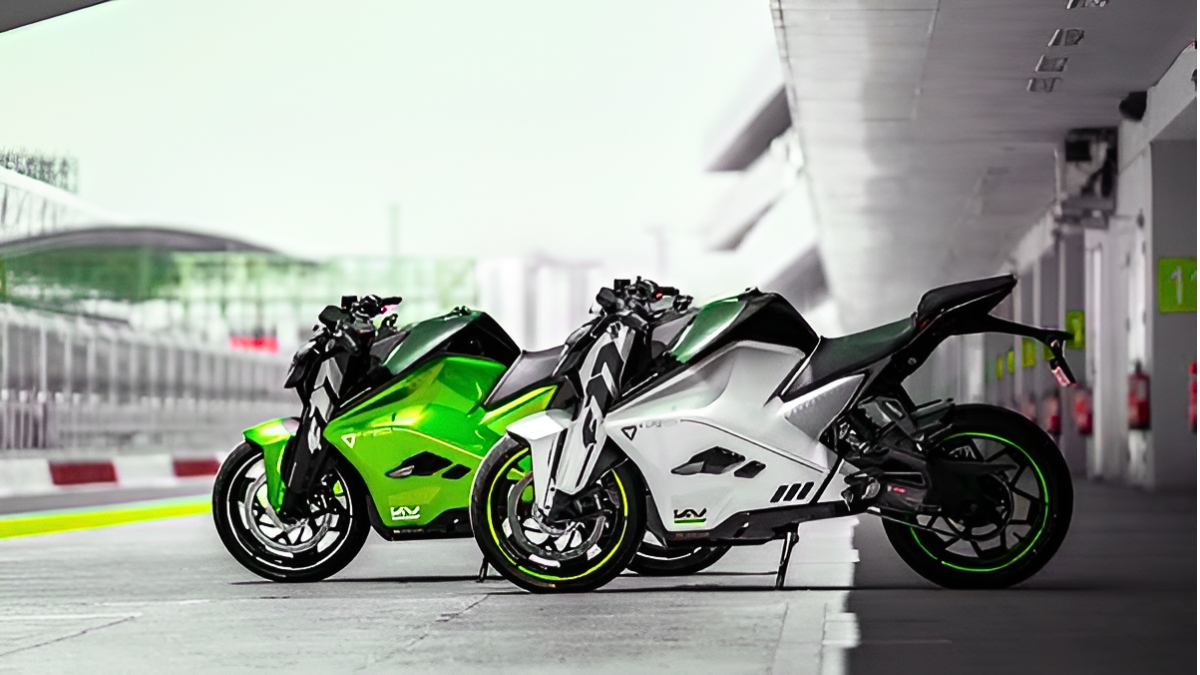
Ultraviolette began as a Bengaluru‑based electric‑motorcycle startup with global ambitions from day one. Their F77 electric sports bike was designed keeping international standards in mind, and now that vision is coming to fruition as the company exports its first batch of F77s to Europe. The export plan was officially flagged off in September 2024, when the first consignment of F77 Mach 2 bikes rolled out from their manufacturing facility near Bengaluru, intended for European Union markets.
This move goes beyond just shipping bikes: it represents a statement of intent. Ultraviolette aims to position itself among global electric‑mobility players by delivering “Made‑in‑India” high‑performance electric motorcycles to discerning European riders. The company sees this as a landmark moment not only for itself, but for India’s EV industry showing that Indian design, engineering and manufacturing can meet rigorous global certification standards and appeal to premium customers overseas.
What the Exported F77 Offers Tech and Performance
For the European market, Ultraviolette exports the F77 Mach 2 version, which is approved under European (UNECE) regulations for road use. The exported F77 comes with a 10.3 kWh battery pack and a motor that delivers around 30 kW of peak power. According to specifications, the F77 offers a claimed real‑world range and acceleration performance that make it competitive among performance e‑motorcycles.
The bike retains its premium build a sturdy chassis, modern suspension, disc brakes with ABS, and a full digital instrument cluster with smartphone connectivity, navigation, ride analytics and battery statistics. The F77 also offers riding modes that allow the rider to balance between performance and efficiency depending on need.
Ultraviolette has emphasised that the bikes shipped to Europe are “completely built units” manufactured in India and exported via CBU route. This ensures that European buyers receive the same build quality as the domestic Indian product, with minimal modifications (apart from number‑plate fittings and cluster‑software calibration to meet European norms).
Markets, Strategy and Roll‑out in Europe
Initially, the launch covers a range of European countries including Germany, France, the United Kingdom, the Netherlands, Belgium, Austria, Italy, Switzerland, Ireland and Luxembourg. The strategy is to use local distributors and partners for sales and after‑sales support, rather than setting up manufacturing abroad at least in the near term.
Ultraviolette’s leadership has stated that Europe was chosen first because of its strong motorcycle‑riding culture, high design and safety standards, and the fact that certification there enables access to around 40 countries globally. The company aims to make exports account for roughly 30–35 percent of its revenues by 2028.
This phased roll‑out will begin with limited volumes, focusing on building brand awareness, establishing a reliable distribution and service network, and understanding market preferences. As demand grows, the hope is to scale up volumes and possibly explore local assembly or broader model launches.
What This Export Means for Indian EV Industry and Global Ambitions
Ultraviolette’s export achievement is more than a business milestone it’s a symbol of how far India’s EV manufacturing capabilities have come. It shows that a home‑grown startup can design, engineer, certify and export a high‑performance electric motorcycle that meets stringent global standards.
It also opens a new chapter in the global perception of Indian electric mobility. Rather than being seen as a market for entry‑level scooters or budget EVs, India might now be viewed as a source of premium electric vehicles capable of competing with established global brands.
For the broader EV industry in India, this could encourage others to aim for global export quality, not just domestic sales: focusing on build quality, certifications, global design standards, and export‑ready models from the outset.
Challenges, Expectations and What to Watch
The path ahead is not without challenges. Exporting to Europe means dealing with strict regulations, compliance standards, safety norms, and customer expectations. Establishing a reliable service and spares network across continents is a logistical and strategic challenge. Additionally, pricing converted to euros including import duties, taxes, and distribution costs will likely make F77 more expensive overseas compared to Indian prices. This may limit its competitiveness against established global brands.
However, Ultraviolette seems aware of these factors. By partnering with known distributors, committing to long‑term parts availability, and designing the bike from the start for a global market, they appear to be aiming for sustainable growth rather than a short‑term splash. The initial response from European riders who value performance, range, and build quality will likely shape the success of this venture.
What It Means for Riders and Bicycle‑to‑Bike Comparisons
For motorcycle enthusiasts in Europe, the entry of F77 offers a new electric alternative in the premium space. With strong acceleration, decent range, modern features, and a lightweight chassis, F77 might appeal to urban riders looking for a mix of performance and sustainability.
For Indian riders, this export development also brings pride an Indian electric bike competing on the world stage. It might help elevate the reputation of Indian EVs both domestically and globally. Over time, if Ultraviolette succeeds in Europe, we might see more such exports deeper integration of global feedback into future models, and possibly more advanced EV bikes emerging from India for international markets.
Final Thoughts
Ultraviolette’s export of the F77 electric sports bike to Europe marks an important turning point for India’s electric‑motorcycle industry. It reflects ambition, confidence, and capability from design and engineering to certification and export logistics. If the bikes deliver on their promise and European customers embrace them, this could well be the beginning of a wave of global EV exports from India.
For an Indian startup to take on the world with a high‑performance electric bike is a bold move, but one that could reshape how Indian EVs are perceived globally. As more bikes reach foreign roads and more riders experience the F77, this story could become a blueprint for future growth in electric mobility from India.