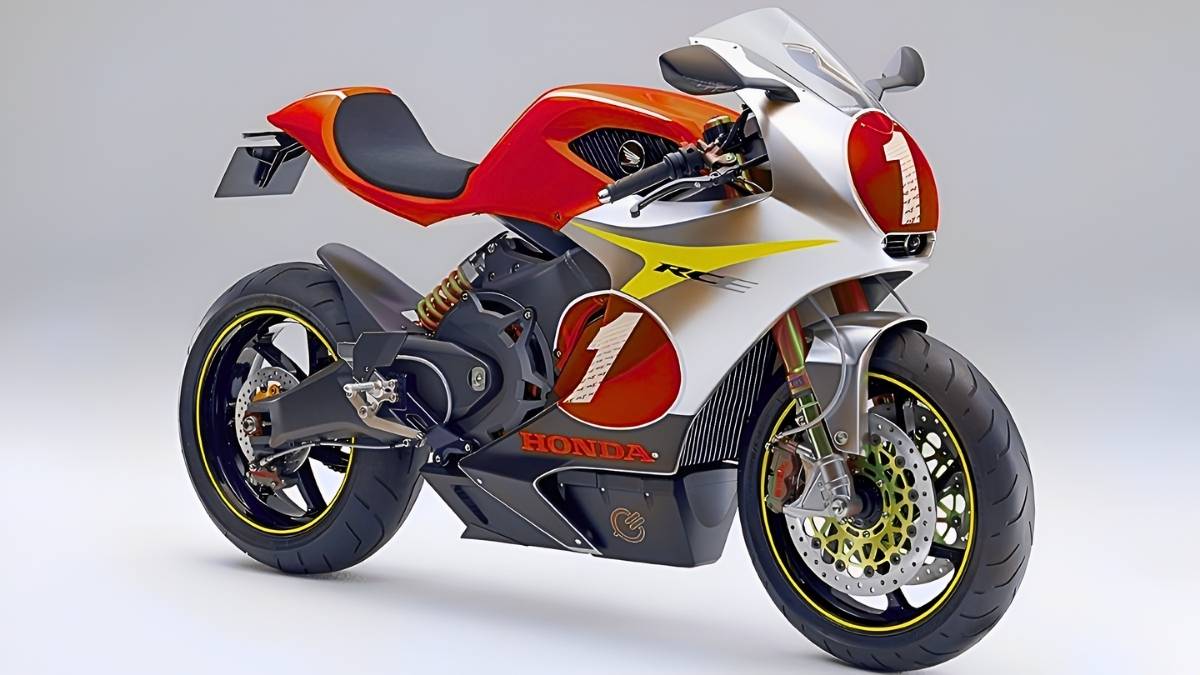
Honda has long been regarded as one of the most influential motorcycle manufacturers in the world. With decades of engineering expertise and a reputation for reliability, the company’s move toward electric mobility has been closely watched. Among its electric initiatives, the RC-E project represents Honda’s serious exploration into high-performance electric motorcycles. Although the RC-E has not yet reached production, its journey offers valuable insight into Honda’s long-term vision for electric two-wheelers.
The Origin of the Honda RC-E Concept
The Honda RC-E was first introduced as a concept motorcycle, designed to showcase what an electric sport bike from Honda could look and feel like. Unlike commuter-focused electric motorcycles, the RC-E was aimed at performance enthusiasts. It carried a clear message that electric power does not have to come at the cost of excitement or riding pleasure.
From its early appearances, the RC-E stood out with a compact sport-bike silhouette and a design inspired by Honda’s racing DNA. The project was never positioned as a short-term product but rather as a development platform to test ideas, technologies, and rider expectations.
Honda’s Philosophy Behind Electric Performance
Honda’s approach to electric motorcycles has been cautious and methodical. Instead of rushing a product to market, the company has focused on long-term research and development. The RC-E reflects this mindset. It was created to explore how electric powertrains can be refined to deliver smooth acceleration, controlled power delivery, and consistent performance.
Honda believes that electric motorcycles must match the emotional connection riders feel with petrol bikes. This includes throttle response, handling balance, and rider feedback. The RC-E serves as a testbed to understand how electric motors, controllers, and chassis design can work together to achieve that goal.
Design and Engineering Direction
Visually, the RC-E follows a clean and functional design language. The bodywork is minimal, emphasizing the compact nature of the electric drivetrain. The frame and swingarm are designed to manage the unique weight distribution of batteries while maintaining agility.
From an engineering standpoint, the RC-E focuses on optimizing mass centralization. Battery placement is carefully considered to preserve handling characteristics similar to traditional sport motorcycles. This is particularly important for performance riding, where balance and control are critical.
Electric Powertrain Development
The heart of the RC-E project lies in its electric powertrain development. Honda has been experimenting with motor efficiency, cooling systems, and power management software. Rather than prioritizing extreme top speeds, the RC-E focuses on smooth, usable power that can be sustained over time.
This approach aligns with Honda’s broader philosophy of reliability and rider confidence. The company aims to ensure that electric motorcycles are not only fast but also predictable and durable under real-world riding conditions.
Learning from Racing and Competition
Honda has extensive experience in motorsports, and this knowledge influences the RC-E project. Electric racing series and track testing have provided valuable data on battery performance, thermal management, and regenerative braking.
The RC-E benefits from this experience by incorporating lessons learned from competitive environments. Track testing helps Honda understand how electric motorcycles behave under stress, allowing engineers to refine systems before considering road use.
Challenges in Electric Motorcycle Development
Developing a high-performance electric motorcycle presents several challenges. Battery weight, range limitations, and charging times remain key concerns. For sport-oriented models like the RC-E, these factors are even more critical, as riders expect lightweight handling and extended riding capability.
Honda has taken a realistic approach to these challenges. Instead of compromising performance or safety, the company continues to improve battery technology and energy efficiency. The RC-E project allows Honda to experiment without the pressure of immediate commercialization.
How the RC-E Fits Into Honda’s Global EV Strategy
The RC-E is part of Honda’s broader electric vehicle strategy, which includes electric scooters, commuter motorcycles, and future performance models. While mass-market electric two-wheelers are likely to arrive first, the RC-E represents Honda’s intention to eventually offer electric motorcycles across multiple segments.
By keeping the RC-E project active, Honda signals that electric performance bikes are not off the table. The lessons learned from this concept will likely influence future production models when technology and market readiness align.
Market Readiness and Timing
One reason the RC-E has not yet entered production is market readiness. High-performance electric motorcycles require supportive infrastructure, including fast charging networks and informed consumers. Honda appears committed to launching such products only when the experience meets its quality standards.
This patient approach may delay market entry, but it helps ensure that when Honda does release an electric sport motorcycle, it will deliver a complete and satisfying ownership experience.
The Role of Sustainability and Regulation
Environmental regulations and sustainability goals are also shaping Honda’s electric journey. The RC-E aligns with global efforts to reduce emissions while maintaining performance standards. Honda’s long-term plans include carbon neutrality, and electric motorcycles will play a key role in achieving that target.
The RC-E demonstrates that sustainability and performance are not mutually exclusive. It reflects Honda’s belief that future motorcycles can be both exciting and environmentally responsible.
What the RC-E Represents for the Future
The Honda RC-E may not be a production-ready motorcycle, but its importance lies in what it represents. It shows Honda’s commitment to innovation, its respect for motorcycling culture, and its willingness to explore new technologies without abandoning core values.
As battery technology improves and charging infrastructure expands, the groundwork laid by the RC-E could eventually lead to a new generation of Honda electric sport motorcycles.
Conclusion
Honda’s RC-E journey is a story of patience, innovation, and long-term vision. Rather than chasing trends, Honda has chosen to carefully study how electric technology can enhance the riding experience. The RC-E serves as a symbol of that philosophy, blending performance aspirations with responsible engineering.
While the RC-E remains a concept, its influence continues to shape Honda’s electric future. When the time is right, the knowledge gained from this ongoing journey could result in an electric motorcycle that truly reflects Honda’s legacy of performance, reliability, and rider-focused design.