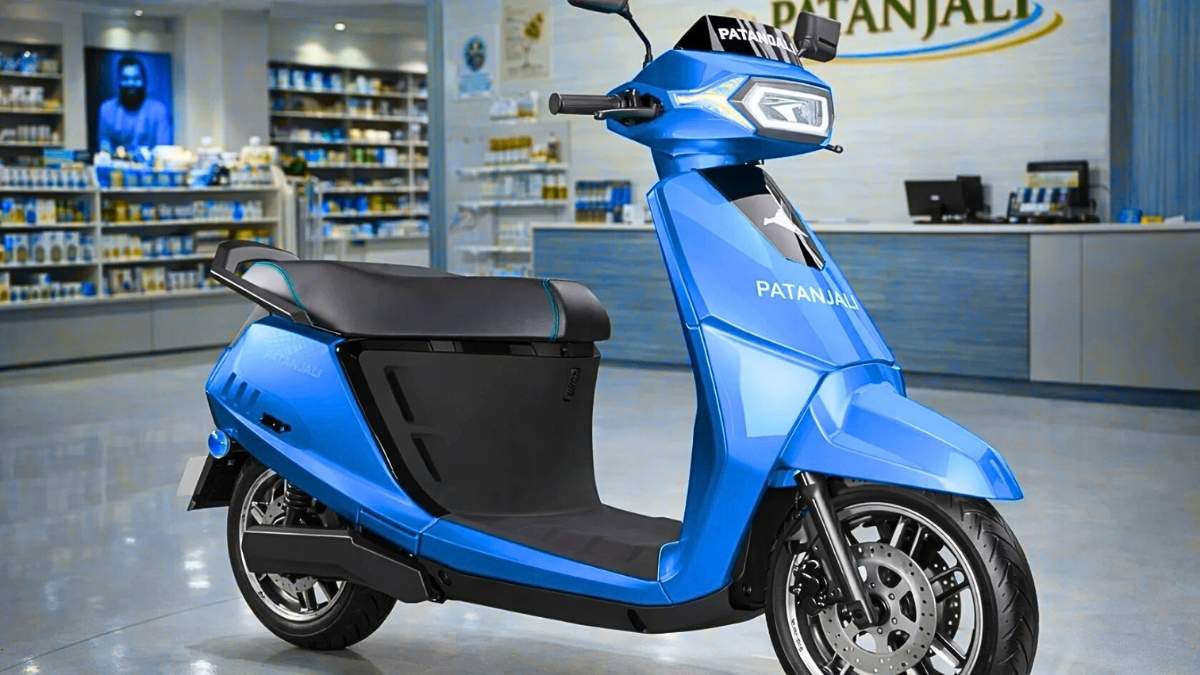
The Indian electric vehicle market is witnessing a remarkable transformation. With rising fuel prices, growing environmental concerns, and government incentives, more consumers are turning toward electric mobility. In this dynamic landscape, Patanjali has stepped into the spotlight by announcing its new electric scooter. The company claims an impressive 210‑kilometer range on a single charge and a top speed of 100 km/h. This bold move has sparked conversations across the industry, as Patanjali aims to blend affordability, sustainability, and performance in one package.
The Rise of Electric Scooters in India
Over the past few years, India has become one of the fastest‑growing markets for electric two‑wheelers. Urban commuters are increasingly choosing EV scooters for their low running costs and eco‑friendly appeal. Brands like Ola Electric, Ather Energy, and Bajaj have already established strong positions. However, the entry of Patanjali, a household name known for its consumer goods and wellness products, adds a new dimension to the competition. The company’s reputation for affordability and mass appeal could help accelerate EV adoption in smaller towns and rural areas.
Patanjali’s Bold Entry into EV Mobility
Patanjali’s decision to enter the electric scooter market is not just about business expansion. It reflects a larger vision of promoting sustainable living and reducing dependence on fossil fuels. The scooter is expected to be priced competitively, making it accessible to a wide range of consumers. By leveraging its existing distribution network, Patanjali could quickly reach millions of potential buyers across India. This strategy positions the brand as more than just a wellness company—it is now a player in the future of mobility.
Performance and Specifications
The headline feature of Patanjali’s electric scooter is its claimed 210‑kilometer range. This figure, if proven in real‑world conditions, would place the scooter among the longest‑range EVs in its category. The top speed of 100 km/h also makes it suitable for highway rides, not just city commuting. Reports suggest that the scooter will come with fast‑charging capabilities, allowing users to recharge quickly during busy schedules. Safety features such as disc brakes, digital displays, and smart connectivity options are expected to be part of the package.
Market Impact and Competition
The announcement has created ripples in the EV industry. Established players are closely watching how Patanjali positions its scooter in terms of pricing and distribution. If the company manages to deliver on its promises, it could disrupt the market by offering high performance at an affordable cost. Competitors may be forced to rethink their strategies, especially in tier‑2 and tier‑3 cities where Patanjali enjoys strong brand loyalty. The move could also encourage more traditional companies to explore electric mobility solutions.
Consumer Expectations
Indian consumers are becoming more demanding when it comes to EVs. They want longer ranges, faster charging, and reliable performance at reasonable prices. Patanjali’s scooter appears to tick many of these boxes. However, the real test will be in execution. Factors such as battery durability, service availability, and charging infrastructure will determine whether the scooter lives up to its hype. Consumers will also look for transparent communication about performance in real‑world conditions, not just laboratory claims.
Government Support and EV Ecosystem
The Indian government has been actively promoting electric mobility through subsidies, tax benefits, and infrastructure development. Initiatives like FAME II have made EVs more affordable for consumers. Patanjali’s entry aligns well with these efforts, as it could help accelerate adoption in semi‑urban and rural areas. The success of the scooter will also depend on the growth of charging stations across the country. Partnerships with local governments and private players could play a crucial role in building a supportive ecosystem.
Challenges Ahead
While the announcement is exciting, challenges remain. Building a reliable EV requires advanced technology, strong supply chains, and consistent after‑sales service. Patanjali will need to prove that it can deliver on these fronts. Battery costs, raw material availability, and competition from established brands could pose hurdles. Moreover, convincing consumers to trust a wellness brand with their mobility needs will require effective marketing and proven performance.
Key Highlights
- Patanjali has announced an electric scooter with a claimed 210‑kilometer range.
- The scooter promises a top speed of 100 km/h, making it suitable for both city and highway use.
- Competitive pricing and wide distribution could help Patanjali reach mass markets.
- The move adds pressure on established EV players to innovate further.
- Success will depend on real‑world performance, service networks, and charging infrastructure.
Final Words
Patanjali’s entry into the electric scooter market marks a significant moment in India’s EV journey. With bold claims of long range and high speed, the scooter has already captured public attention. If the company can deliver on its promises, it could reshape the industry by making electric mobility more accessible to everyday consumers. The coming months will reveal whether Patanjali’s scooter is a true game‑changer or just another ambitious announcement. Either way, its arrival signals that the EV revolution in India is gaining unstoppable momentum.