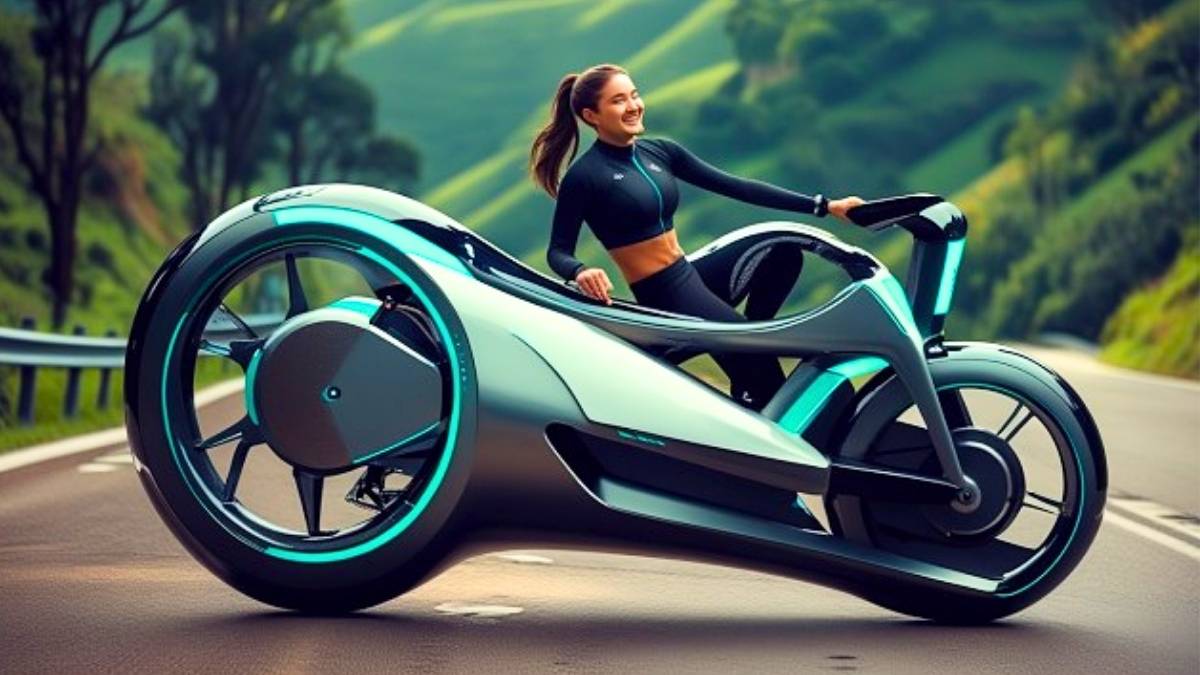
As technology continues to advance, so does the world of cycling. Bicycles, once seen as simple modes of transportation or sports equipment, are now transforming into high-tech machines packed with innovative features. The future of biking is no longer just about sleek designs and lightweight frames; it’s about combining cutting-edge technology, sustainable materials, and smarter ways to ride. In this article, we’ll explore 25 futuristic bikes that promise to completely change the way we ride in the years to come.
1. The Smart Bike Revolution
Smart bikes are already starting to make waves in the cycling industry. Equipped with sensors, GPS, and wireless connectivity, these bikes offer a more connected and convenient riding experience. Smart bikes like the VanMoof S3 are designed to integrate seamlessly with your smartphone, providing real-time performance data, automatic locking systems, and anti-theft features. In the future, we can expect even more advanced smart bikes that will not only track your ride but also provide augmented reality navigation and live feedback on your cycling technique.
2. Electric Bikes (E-Bikes) Take Over
Electric bikes are changing the game for commuters and leisure cyclists alike. With powerful motors that assist pedaling, e-bikes make it easier to tackle long distances and challenging terrain. The future of e-bikes looks promising, with companies like Rad Power Bikes and Specialized introducing models that can reach impressive speeds and travel longer distances on a single charge. In the coming years, we’ll see even more lightweight e-bikes with faster charging times and improved battery technology, making them a viable alternative to cars for short commutes and urban transport.
3. Carbon Fiber Frames for Lighter, Faster Rides
Carbon fiber has revolutionized the design of bike frames, making them lighter, stronger, and more efficient. Traditional metal frames are heavy and can slow riders down, but carbon fiber’s strength-to-weight ratio is unmatched. This material is now commonly used in high-performance bikes, and as the technology advances, it’s expected that more affordable bikes will feature carbon fiber frames. In the future, these bikes will be even more aerodynamic, providing smoother rides and faster speeds for both professional cyclists and weekend warriors.
4. Solar-Powered Bikes: Harnessing the Power of the Sun
With environmental sustainability becoming a greater priority, solar-powered bikes are on the horizon. These bikes feature integrated solar panels that can charge the battery as you ride, making them perfect for long-distance cycling without the need to plug in. The Sion Solar Bike, for example, utilizes solar panels on its frame to generate power, allowing for longer rides without the constant need for recharging. In the future, solar technology will improve, and solar-powered bikes will become even more efficient, providing cyclists with a truly green mode of transport.
5. Foldable Bikes for the Urban Commuter
For people living in busy cities, foldable bikes are an essential part of their daily routine. These bikes offer portability and convenience, allowing riders to easily collapse the bike and take it on public transport or store it in tight spaces. Brompton and Tern are pioneers in foldable bike designs, creating models that can be folded down in seconds and are easy to carry. The next generation of foldable bikes will be even more compact, lightweight, and stylish, making them perfect for urban commuters who need a convenient, space-saving solution.
6. Autonomous Bicycles: The Ride of the Future
Imagine a bike that doesn’t require you to steer, brake, or even pedal—an autonomous bicycle that rides itself. While it may sound like science fiction, self-riding bikes are already being researched and developed. Companies like Jarvish are exploring the possibility of integrating autonomous technology into bikes, allowing riders to sit back and relax while the bike takes control. This innovation could change the way we think about cycling, offering a more effortless, hands-free riding experience, especially for those with mobility issues.
7. The Rise of Smart Helmets
While the bike itself is evolving, so is the gear we wear while riding. Smart helmets are becoming an essential part of cycling safety and convenience. These helmets are equipped with built-in speakers, microphones, and even cameras to provide a more connected cycling experience. The Livall BH60 smart helmet, for instance, allows you to take calls, listen to music, and navigate hands-free while riding. In the future, helmets will include even more advanced features, such as augmented reality displays, real-time health monitoring, and even crash detection systems that automatically alert emergency services if needed.
8. Hyperloop-Inspired Transport Bikes
The concept of Hyperloop, a high-speed, vacuum-based transportation system, has inspired futuristic bike designs that incorporate similar principles of speed and efficiency. The Schwinn Hyperglide, for example, is designed to be ultra-aerodynamic, offering extremely fast speeds on straightaways. Future bikes may be inspired by this idea, incorporating aerodynamic principles and advanced materials to reduce drag and increase efficiency, allowing cyclists to reach previously unimaginable speeds.
9. Hydrogen-Powered Bikes
As the search for cleaner energy sources intensifies, hydrogen-powered bikes may soon become a reality. These bikes would use hydrogen fuel cells to generate electricity, offering a clean, renewable power source for long-distance rides. Companies are already researching how to incorporate hydrogen fuel cells into two-wheeled vehicles, and the result could be bikes that combine the power of an electric motor with zero emissions. These bikes would not only be environmentally friendly but would also provide cyclists with a new level of performance and efficiency.
10. 3D Printed Bikes: Customization at Its Best
The future of bike manufacturing may lie in 3D printing. This technology allows for precise, custom-made bike frames that are perfectly suited to the rider’s needs. Whether it’s a lightweight frame for speed or a sturdy frame for off-road adventures, 3D printing offers endless possibilities for customization. In the future, riders will be able to design and print their own bikes from home, creating a completely personalized cycling experience. The possibilities for innovation in bike design are truly limitless with 3D printing.
11. Self-Healing Tires
Flat tires could become a thing of the past thanks to self-healing tire technology. These innovative tires are designed with materials that can automatically repair small punctures, keeping your ride smooth and uninterrupted. While self-healing tires are still in the early stages of development, they hold incredible potential for the future, especially for long-distance cyclists who want a hassle-free experience.
Conclusion: A Glimpse Into the Future of Cycling
The future of biking is nothing short of exciting. From electric bikes that make commuting a breeze to futuristic smart bikes that are packed with high-tech features, the possibilities are endless. As technology continues to advance, we can expect even more groundbreaking innovations in the cycling world. Whether it’s making bikes smarter, more efficient, or more sustainable, these futuristic designs will completely redefine the way we ride in the future.